
Protein Interaction Antibody Pairs


Cell Signaling Technology Phospho-S6 Ribosomal Protein (Ser235/236) Matched Antibody Pair 1 Kit

Phospho-S6 Ribosomal Protein (Ser235/236) Matched Antibody Pair 1 Kit

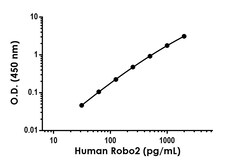
Abcam Robo2 Antibody Pair - BSA and Azide free, 10 x 96 Tests
Robo2 Antibody Pair - BSA and Azide free is a kit containing recombinant capture and detector antibodies in a carrier-free formulation for the measurement of Robo2.
The product is subject to the following: Abcam Restricted Use Statement


Bioss KD-Validated LDL receptor rela
LDL Receptor Related Protein 8 Primary Antibody Unconjugated Public Immunogen Range 900-963/963 Host Species Rabbit Target Species Human Mouse Rat Clonality Monoclonal Applications WB FCM IC Concentration Lot dependent Size 50 ul Storage Buffer Supplied in PBS (pH 7 4) containing 50% glycerol and 0 02% sodium azide
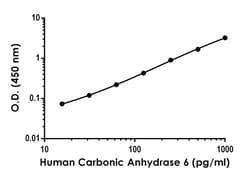
Abcam Human Carbonic Anhydrase 6 Antibody Pair - BSA and Azide free (CA6), 10 x 96 Tests
Human Carbonic Anhydrase 6 Antibody Pair - BSA and Azide free (CA6) is a kit containing recombinant capture and detector antibodies in a carrier-free formulation for the measurement of Human Carbonic Anhydrase 6 (CA6).
The product is subject to the following: Abcam Restricted Use Statement
ABclonal Technology p-GSK3B-Y216 - GSK3a-Y279
The protein encoded by this gene is a serine-threonine kinase belonging to the glycogen synthase kinase subfamily It is involved in energy metabolism neuronal cell development and body pattern formation Polymorphisms in this gene have been implicated in modifying risk of Parkinson disease and studies in mice show that overexpression of this gene may be relevant to the pathogenesis of Alzheimer disease Alternatively spliced transcript variants encoding different isoforms have been found for this gene
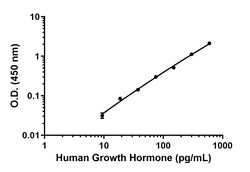
Abcam Human Growth Hormone Antibody Pair - BSA and Azide free, 10 x 96 Tests
Human Growth Hormone Antibody Pair - BSA and Azide free is a kit containing recombinant capture and detector antibodies in a carrier-free formulation for the measurement of Human Growth Hormone.
The product is subject to the following: Abcam Restricted Use Statement
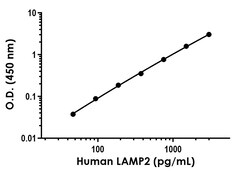
Abcam Human LAMP2 Antibody Pair - BSA and Azide free, 10 x 96 Tests
Human LAMP2 Antibody Pair - BSA and Azide free is a kit containing recombinant capture and detector antibodies in a carrier-free formulation for the measurement of Human LAMP2.
The product is subject to the following: Abcam Restricted Use Statement
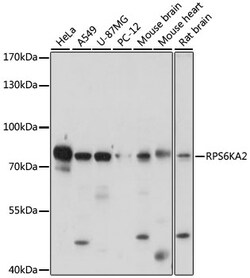
ABclonal Technology RPS6KA2 Rabbit pAb
This gene encodes a member of the RSK (ribosomal S6 kinase) family of serine/threonine kinases. This kinase contains two non-identical kinase catalytic domains and phosphorylates various substrates, including members of the mitogen-activated kinase (MAPK) signalling pathway. The activity of this protein has been implicated in controlling cell growth and differentiation. Alternative splice variants, encoding different isoforms, have been characterized.
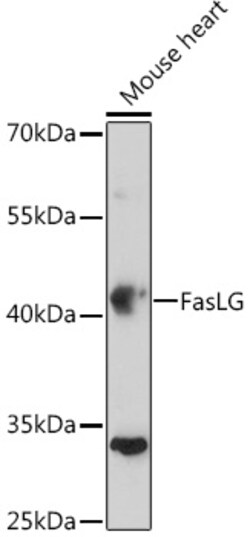
ABclonal Technology FasLG Rabbit pAb
This gene is a member of the tumor necrosis factor superfamily. The primary function of the encoded transmembrane protein is the induction of apoptosis triggered by binding to FAS. The FAS/FASLG signaling pathway is essential for immune system regulation, including activation-induced cell death (AICD) of T cells and cytotoxic T lymphocyte induced cell death. It has also been implicated in the progression of several cancers. Defects in this gene may be related to some cases of systemic lupus erythematosus (SLE). Alternatively spliced transcript variants have been described.
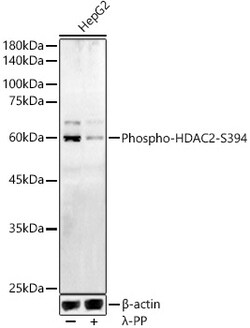
ABclonal Technology Phospho-HDAC2-S394 Rabbit pAb
This gene product belongs to the histone deacetylase family. Histone deacetylases act via the formation of large multiprotein complexes, and are responsible for the deacetylation of lysine residues at the N-terminal regions of core histones (H2A, H2B, H3 and H4). This protein forms transcriptional repressor complexes by associating with many different proteins, including YY1, a mammalian zinc-finger transcription factor. Thus, it plays an important role in transcriptional regulation, cell cycle progression and developmental events. Alternative splicing results in multiple transcript variants.
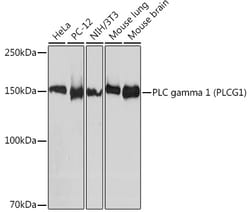
ABclonal Technology PLC gamma 1 (PLCG1) Rabbit mAb
The protein encoded by this gene catalyzes the formation of inositol 1,4,5-trisphosphate and diacylglycerol from phosphatidylinositol 4,5-bisphosphate. This reaction uses calcium as a cofactor and plays an important role in the intracellular transduction of receptor-mediated tyrosine kinase activators. For example, when activated by SRC, the encoded protein causes the Ras guanine nucleotide exchange factor RasGRP1 to translocate to the Golgi, where it activates Ras. Also, this protein has been shown to be a major substrate for heparin-binding growth factor 1 (acidic fibroblast growth factor)-activated tyrosine kinase. Two transcript variants encoding different isoforms have been found for this gene.
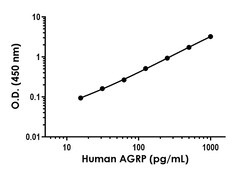
Abcam Human AGRP Antibody Pair - BSA and Azide free, 10 x 96 Tests
Human AGRP Antibody Pair - BSA and Azide free is a kit containing recombinant capture and detector antibodies in a carrier-free formulation for the measurement of Human AGRP.
The product is subject to the following: Abcam Restricted Use Statement
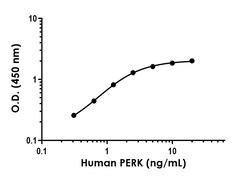
Abcam Human PERK Antibody Pair - BSA and Azide free, 10 x 96 Tests
Human PERK Antibody Pair - BSA and Azide free is a kit containing recombinant capture and detector antibodies in a carrier-free formulation for the measurement of Human PERK.
The product is subject to the following: Abcam Restricted Use Statement
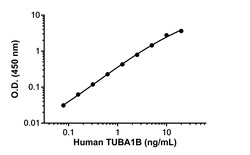
Abcam TUBA1B Antibody Pair - BSA and Azide free, 10 x 96 Tests
TUBA1B Antibody Pair - BSA and Azide free is a kit containing recombinant capture and detector antibodies in a carrier-free formulation for the measurement of TUBA1B.
The product is subject to the following: Abcam Restricted Use Statement